
Materials · Concepts Blog
Planning Interiors That Survive the Kerala Monsoon
Kerala's long monsoon and year-round humidity are hard on interiors. Most of the swelling shutters, peeling edges and black spots we are called to fix come from choices made at the design stage. Here is what we look at before we build.
Use the Right Board in the Right Place
Not every cabinet needs the most expensive board, but wet areas do. Under the kitchen sink, in bathroom vanities and in utility areas we use boiling-water-resistant (BWR/BWP) plywood. Plain MDF and particle board soak up water at the edges and do not recover once they swell.
Seal Every Edge
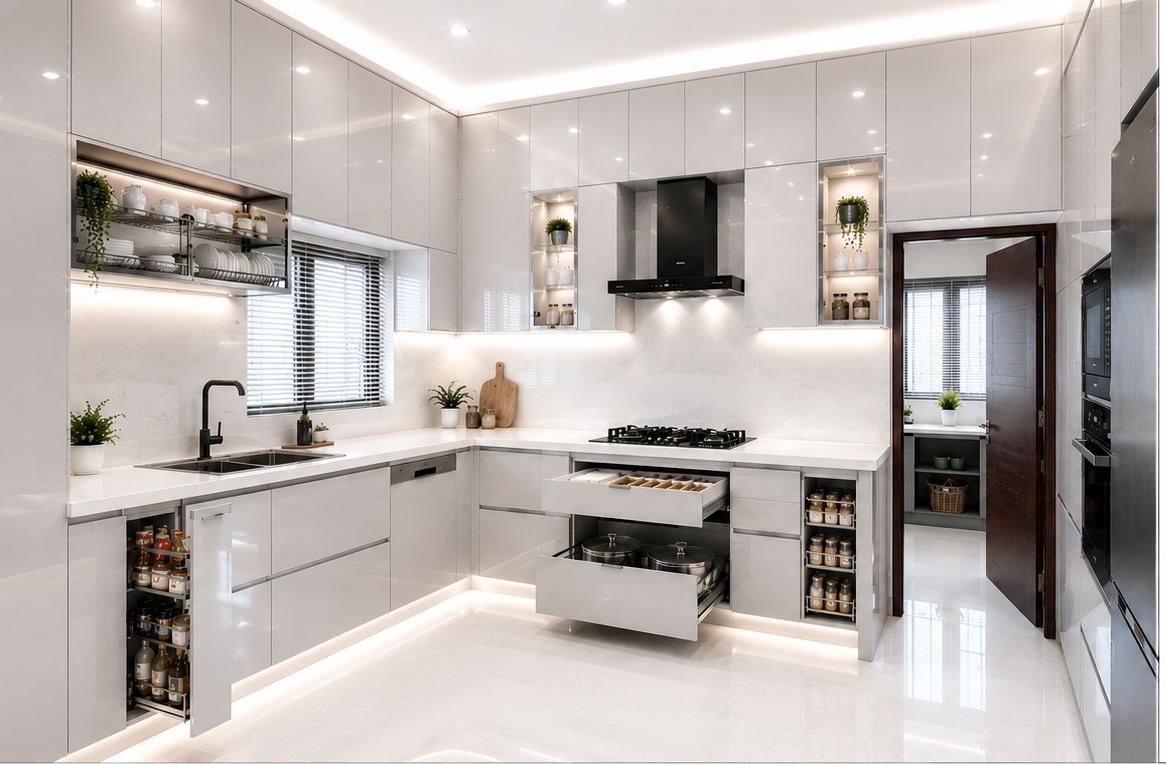
Moisture gets in through cut edges, not the laminate face. Machine-applied edge banding on all four sides of a shutter, including the hidden top and bottom, makes a large difference to how long a kitchen lasts.
Let the Air Move
- Leave a small gap behind wardrobes on external walls so they do not trap damp air.
- Add ventilation slots or louvred panels to shoe racks and store rooms.
- Fit an exhaust fan in every bathroom and over the hob, and use it.
Fix the Wall Before You Finish It
Paint, wallpaper and panelling only hide seepage for a while. If a wall shows damp patches, the source (a terrace, a pipe, a gap in the window frame) needs repair first. We check walls with you during the site visit before suggesting finishes.
Choose Finishes That Are Easy to Wipe
Laminates, acrylic and lacquered glass handle humidity better than raw veneer in kitchens. Veneer works beautifully in bedrooms and living rooms when it is properly polished and sealed.
By the Concepts team, Kozhikode ·
Related service: Modular Kitchens and Wardrobes in Kozhikode
Stay Updated
Enjoyed This? Get the Next One by Email
One email when a new post or showroom arrival goes up, or follow Concepts where you already spend time.